

Did you know 72% of homeowners encounter unexpected challenges during major home upgrades? Renovation projects often start with excitement but can quickly turn stressful without proper guidance. That’s where expertise makes all the difference.
Transforming your space requires more than just vision—it demands strategic planning and reliable partners. We’ve helped hundreds of families navigate every detail, from layout optimization to material selection. Our approach ensures your project stays on track, both financially and creatively.
Whether you’re dreaming of modern minimalism or cozy farmhouse charm, clear communication is key. We prioritize transparency to eliminate surprises. Reach out at +1-301-328-3678 or visit our Waldorf showroom to discuss your goals. Let’s turn challenges into opportunities together.
Key Takeaways
- Strategic planning prevents common renovation setbacks
- Professional guidance ensures budget-friendly decisions
- Material quality impacts long-term satisfaction
- Clear timelines reduce project stress
- Local expertise delivers tailored solutions
Understanding the Kitchen Remodel Process
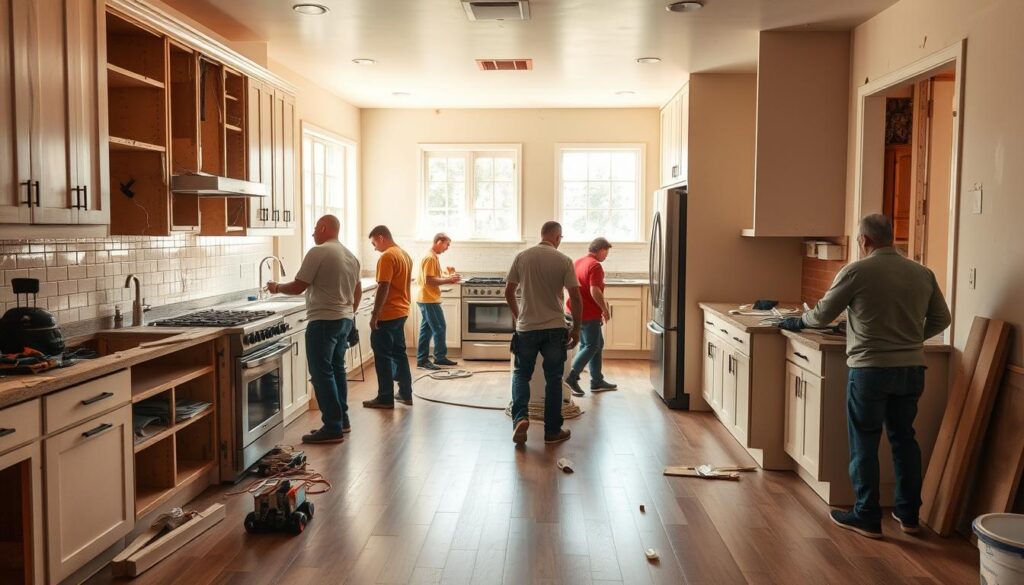
Embarking on a home transformation requires clear expectations. Many homeowners underestimate how multiple stages interconnect – one delay can ripple through your entire schedule. We break down complex tasks into manageable steps to keep everything flowing smoothly.
Breaking Down the Timeline
Every successful project follows this pattern:
- Preparation: Clearing existing structures and addressing hidden issues
- Infrastructure: Updating wiring, pipes, and ventilation systems
- Surfaces: Installing durable materials that match your lifestyle
- Details: Adding personality through lighting and hardware
Getting Started Right
Begin by scheduling a consultation to discuss your priorities. We review your space’s unique needs – from traffic patterns to storage requirements. Our team then creates a phased plan that minimizes disruptions to your daily routine.
Allow extra time for permit approvals and material deliveries. These steps often take longer than anticipated. Regular check-ins ensure we adapt quickly if challenges emerge during work.
Assessing Your Existing Kitchen and Defining Goals
Understanding how your current setup functions lays the groundwork for meaningful improvements. We recommend beginning with a detailed walkthrough of your existing kitchen, noting areas that enhance or hinder daily tasks. This honest evaluation reveals opportunities to boost both practicality and visual appeal.

Identifying Core Pain Points
Start by examining storage challenges. Do cabinets overflow with rarely used items? Is your countertop cluttered during meal prep? These frustrations often stem from poor organization or insufficient space. Track how you move through the area while cooking—bottlenecks near appliances or sinks frequently indicate layout issues.
Lighting also plays a critical role. Dim corners or harsh overhead fixtures can strain eyes during food preparation. We’ve found that 68% of homeowners overlook this aspect until after renovations begin.
Setting Remodeling Priorities
Create two lists: must-haves and nice-to-haves. Focus first on functional upgrades like pull-out shelves or task lighting. Entertaining needs might push for a larger island, while busy families often prioritize durable surfaces.
Discuss these goals with everyone who uses the space regularly. A chef’s workflow differs from a parent packing school lunches. Balancing these perspectives ensures your investment serves all users effectively.
Planning Your Budget and Managing Costs
Smart financial planning transforms renovation dreams into reality. Recent data shows homeowners invest between $14,600 and $41,485 in upgrades, with most projects averaging $26,934. These figures highlight why understanding spending patterns matters.
Budget Breakdown Essentials
We guide clients through these typical allocations:
- Cabinetry: 35-40% of total costs
- Appliances: 15-20%
- Countertops: 10-15%
- Professional services: 20-35%
Preparing for Surprises
Unexpected issues emerge in 83% of projects. That’s why we insist on reserving 20% of your budget for contingencies. Common surprises include:
- Outdated electrical wiring
- Plumbing needing upgrades
- Structural adjustments
Obtain multiple quotes for materials and labor—this simple step often saves 12-18% on overall costs. Focus funds on high-use areas like countertops first. Our team helps balance quality investments with smart savings so your vision stays achievable.
Exploring Popular Kitchen Layouts
Did you realize your floor plan impacts meal prep efficiency as much as appliance quality? The right configuration shapes how you interact with your space daily. Smart choices here balance workflow with personal needs while keeping costs manageable.
Four Functional Configurations
We evaluate these core layouts for different lifestyles:
- U-Shape: Three walls of counters maximize workspace—perfect for multiple cooks
- L-Shape: Perpendicular counters create flexible zones in smaller spaces
- Galley: Parallel counters streamline compact areas but need clever storage
- Island: Adds social hubs and prep space, requiring 10+ feet clearance

Matching Layouts to Life Patterns
Consider existing plumbing locations first—relocating pipes adds 15-20% to budgets. Frequent entertainers lean toward open island designs, while serious cooks often prefer U-shaped efficiency.
Test movement patterns during peak use times. Can two people pass comfortably near the oven? Does the fridge door block walkways? We map these interactions to prevent future frustrations.
Remember: The classic work triangle (sink-stove-fridge) still dictates flow. Keep each side between 4-9 feet for optimal cooking experiences. Smaller households might prioritize counter space over multiple zones.
Designing Your Kitchen: Style, Color, and Finishes
Your home’s heart deserves a design that balances beauty and brains. Thoughtful combinations create spaces that feel both personal and polished. Let’s explore how to make choices that stand the test of time.
Choosing the Right Color Palette
Colors set your space’s mood. Soft neutrals make compact areas feel airy, while deep blues add drama to larger rooms. We help clients select hues that complement natural light and existing furnishings.
Consider undertones carefully. Warm grays pair well with wood accents, while cool whites brighten modern schemes. Sample swatches at different times of day before committing.
Selecting Cabinets, Countertops, and Backsplashes
Cabinet doors set the style tone. Shaker profiles offer timeless appeal, while flat panels suit contemporary spaces. We recommend durable finishes like semi-gloss paint for busy households.
Quartz countertops provide stain resistance for families, while marble-look porcelain offers luxury without maintenance. Backsplashes present opportunities for personality—try textured tiles or metallic mosaics.
Lighting, Fixtures, and Accents
Layer different light types for functionality. Under-cabinet LEDs illuminate tasks, while pendant lights define zones. Mix metallic finishes intentionally—brushed nickel faucets with chrome cabinet handles create visual harmony.
Final touches matter most. Cabinet hardware can update a space instantly. We guide clients toward cohesive combinations that feel curated, not cluttered.
Implementing Affordable Upgrades for Every Space
Revitalizing your cooking area doesn’t require emptying your wallet. Clever updates can breathe new life into tired spaces while keeping funds intact for future enhancements. Let’s explore smart approaches that deliver maximum visual impact with minimal investment.
DIY Projects and Budget-Friendly Solutions
Transform dated cabinetry with strategic color choices. Painting upper cabinets a light hue while keeping lower units darker creates depth and modern contrast. This $200 project often achieves $2,000 worth of visual impact.
Swap hardware for instant style updates. Modern pulls in matte black or brushed brass refresh storage areas effortlessly. We’ve helped clients achieve luxury look using affordable replicas of high-end designs.
Peel-and-stick backsplashes offer temporary solutions with permanent appeal. These adhesive tiles withstand heat and moisture while adding personality. Choose metallic finishes for small spaces needing light reflection.
Consider these cost-effective projects:
- Under-cabinet LED strips for task lighting
- Open shelving using repurposed materials
- Decorative panels for flat cabinet fronts
Focus your budget on changes addressing daily frustrations first. A $150 faucet upgrade improves functionality more than $1,500 flooring might. We help prioritize improvements that make spaces work smarter, not harder.
Remember: Quality doesn’t always mean costly. Many clients achieve magazine-worthy results through strategic combinations of DIY efforts and professional guidance. Let’s discuss how to stretch your money further while creating the space you deserve.
Maximizing Storage and Functional Space
Smart storage solutions transform cramped areas into functional hubs. Thoughtful designs unlock hidden potential while maintaining aesthetic appeal. Let’s explore how to create harmony between practicality and style.
Tailored Solutions for Everyday Needs
Custom cabinetry adapts to your unique lifestyle. Pull-out shelves reveal forgotten corners, while vertical dividers keep baking sheets accessible. We’ve seen how 18-inch deep drawers revolutionize pot storage compared to traditional lower cabinets.
Consider these space-saving upgrades:
- Rotating corner units (lazy Susans) for awkward angles
- Appliance garages that hide countertop clutter
- Toe-kick drawers for flatware or linens
Strategic Placement for Better Movement
Minor layout tweaks create major improvements. Shifting appliances even 12 inches often reveals room for extra base cabinets. One client gained 30% more prep area simply by repositioning their refrigerator.
Upper cabinets extending to the ceiling add storage without expanding footprints. Use this vertical real estate for seasonal items or special occasion serveware. Glass-front doors maintain an airy feel while keeping contents within reach.
We help homeowners evaluate their daily routines to identify priority zones. Do you need quick-access spice racks? A dedicated coffee station? Our designs turn pain points into personalized solutions that streamline your cooking experience.
Enhancing Your Kitchen with Modern Lighting and Fixtures
Lighting transforms more than visibility—it shapes how we experience our spaces. Strategic placement creates both functionality and mood. We help homeowners balance practical needs with personal style through layered illumination solutions.
Task and Ambient Balance
Under-cabinet LEDs eliminate shadows during food prep, while oversized pendants add drama above islands. Dimmable recessed lights adapt to daytime cooking and evening gatherings. Consider directional spots for artwork or textured walls.
Ambient options like flush-mount chandeliers soften harsh overhead glare. We often pair these with under-counter tape light for a warm glow. Layering different sources prevents eye strain and boosts energy efficiency.
Smart Energy Choices
LED bulbs use 75% less power than traditional options. Motion sensors in pantries or appliance zones prevent wasted electricity. While energy-efficient features cost 15-20% more initially, they typically pay for themselves within 3 years through utility savings.
Smart systems let you control brightness via phone apps—perfect for adjusting moods remotely. We prioritize durable materials that withstand heat near ovens or steam near sinks. Your lighting should work as hard as your appliances without constant replacements.